If you are planning to redo your lawn in Maryland, you are eventually going to face the same question that thousands of Maryland and Delaware homeowners face every year: should I go with sod or artificial turf?
Both are legitimate options. Both have real advantages. And the right answer depends entirely on your specific situation — your yard conditions, your lifestyle, your budget, how you use the space, and how much time and money you are willing to invest in long-term lawn care.
This guide gives Maryland homeowners a complete, honest comparison of sod versus artificial turf across every dimension that matters — so you can make the right choice for your property without regret.
Sod is real grass — rolls of mature, living turf grown on a farm and transplanted to your yard. It is natural, alive, and requires the same ongoing care as any natural lawn once established. Artificial turf is a synthetic surface — engineered plastic fibers installed over a prepared base — that looks and feels like grass without being alive.
Both can look excellent. Both can cover a Maryland yard completely and give it a finished, green appearance. What differs is everything that happens after installation.
Sod looks exactly like natural grass because it is natural grass. The color, texture, and movement in the wind are authentic in a way that no synthetic product fully replicates. A healthy sod lawn in Maryland in peak growing season is genuinely beautiful.
The challenge is keeping it that way. Maryland's climate is demanding on cool-season grasses. Hot, dry summers stress and brown fescue lawns without irrigation. Shaded areas thin out and die. Heavy foot traffic creates bare patches. The natural grass look comes with natural grass inconsistency.
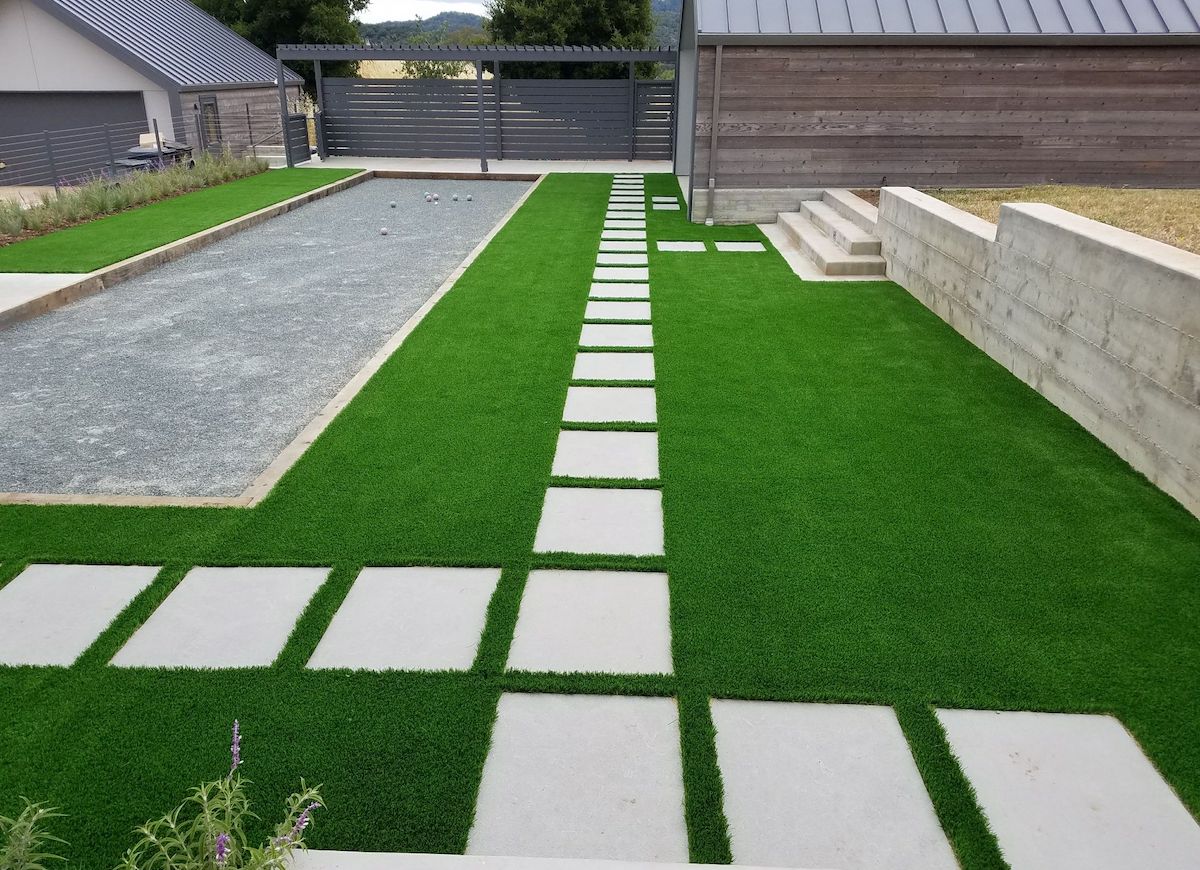
Artificial turf has improved dramatically in recent years. Premium synthetic turf products designed for residential use have realistic blade shapes, natural color variation built in, and a softness underfoot that surprises most homeowners who haven't experienced modern products. From a reasonable distance, quality artificial turf is genuinely difficult to distinguish from natural grass.
Up close or in direct comparison, the differences are visible — no seed heads, no growth variation, a slight uniformity that natural grass doesn't have. But for most Maryland homeowners' practical purposes, premium artificial turf looks excellent.
Winner: Sod for authenticity. Artificial turf for year-round consistency.
Sod performance in Maryland depends heavily on the grass species, sun exposure, and how much care it receives. Tall fescue — the most popular sod choice in Maryland — is well-suited to our climate but will brown and stress during extended summer heat without irrigation. Zoysia handles Maryland heat beautifully but goes dormant and brown in winter. Getting a consistently green natural lawn through all four Maryland seasons requires the right species, adequate water, fertilization, and ongoing care.
Artificial turf performs consistently through all of Maryland's seasons without any of the seasonal variation challenges. It stays green in summer drought, winter dormancy, heavy shade, and heavy foot traffic. The one legitimate heat concern with artificial turf — that it can get warm on hot, sunny Maryland summer days — has been significantly addressed by newer heat-reduction technologies in premium products.
Winner: Artificial turf for year-round consistency and low-effort performance. Sod for those who want a natural, living lawn and are willing to invest in its care.
Sod requires all of the same ongoing maintenance as a natural lawn: mowing every 1–2 weeks during the growing season, watering during dry Maryland summers, fertilizing 2–4 times per year, overseeding thin or bare areas, weed control, and occasional aeration and dethatching. This is not insignificant — a healthy natural lawn in Maryland requires real time and real money over its lifetime.
Artificial turf requires essentially none of this. No mowing. No watering. No fertilizing. No overseeding. Maintenance consists of occasional rinsing to remove dust and debris, brushing the fibers upright if they flatten in high-traffic areas, and removing leaves and organic material that accumulate on the surface. For most Maryland homeowners, this amounts to a few hours per year.
Winner: Artificial turf by a significant margin for maintenance.
Sod installation in Maryland runs $2.00–$3.75 per sq ft installed (material plus labor and ground prep). For a 2,000 sq ft lawn, total sod installation cost runs $4,000–$7,500. However, ongoing annual maintenance costs — mowing, fertilizing, watering, overseeding — add $1,000–$3,000+ per year depending on your approach.
Artificial turf installation in Maryland runs $8–$20 per sq ft installed (material plus base preparation and labor). For a 2,000 sq ft lawn, total artificial turf installation cost runs $16,000–$40,000. Ongoing maintenance is minimal — a few hundred dollars per year at most.
Over a 10-year horizon, the math often narrows significantly between the two options when ongoing sod maintenance costs are included. Over 15–20 years, artificial turf frequently costs less in total.
Winner: Sod for lower upfront cost. Artificial turf for lower long-term total cost on many Maryland properties.
Sod with dogs in Maryland is a constant challenge. Dogs create bare patches, muddy areas, and brown spots from urine. Wet Maryland springs and falls mean muddy paws tracking into the house regularly. High-traffic dog paths through a sod lawn look worn and patchy within months.
Artificial turf with dogs solves most of these problems directly. No mud, no bare patches, no brown urine spots. Quality artificial turf is non-toxic and safe for dogs and cats. It drains quickly, dries fast, and stays clean with occasional rinsing. For Maryland homeowners with active dogs, this is one of the most compelling reasons to choose artificial turf.
Winner: Artificial turf for pet owners.
Sod is soft, natural, and cooler underfoot — qualities that many parents prefer for children's play areas. The natural softness of real grass provides a forgiving surface for falls.
Artificial turf is extremely popular for children's play areas because it stays consistently clean, never muddy, and is available in padded underlayment versions that provide additional fall protection. The concern about heat in direct summer sun is valid but manageable with shade structures or morning use during peak Maryland summer heat.
Winner: Depends on priorities. Sod for natural softness and coolness. Artificial turf for cleanliness and consistent play surface.
Sod supports biodiversity, absorbs carbon, produces oxygen, helps manage stormwater, and supports soil health. A natural lawn contributes positively to the local ecosystem in ways that synthetic products cannot replicate.
Artificial turf eliminates water use for irrigation, eliminates fertilizer and pesticide runoff — a real benefit in Maryland's Chesapeake Bay watershed — but does not support biodiversity and creates heat island effects in some applications.
Neither option is perfectly sustainable. For environmentally conscious Maryland homeowners, this is a genuine consideration worth weighing alongside practical factors.
Choose sod if you want an authentic, living lawn, you enjoy lawn care or are committed to professional maintenance, you have the budget for ongoing upkeep, and environmental considerations are a priority.
Choose artificial turf if you want a consistently green, low-maintenance lawn year-round, you have dogs or heavily used play areas, shaded areas where natural grass won't survive, or you want to eliminate the time and cost of lawn maintenance entirely.
Consider both for different areas of the same property — artificial turf for a dedicated dog run or play zone, sod for the main lawn areas.

At Unlimited Landscaping, we install both sod and premium artificial turf for homeowners across Maryland and Delaware. We will help you evaluate which option makes the most sense for your specific property and goals.
Request your free estimate today.
Unlimited Landscaping — Where Your Outdoors Has No Limits.


